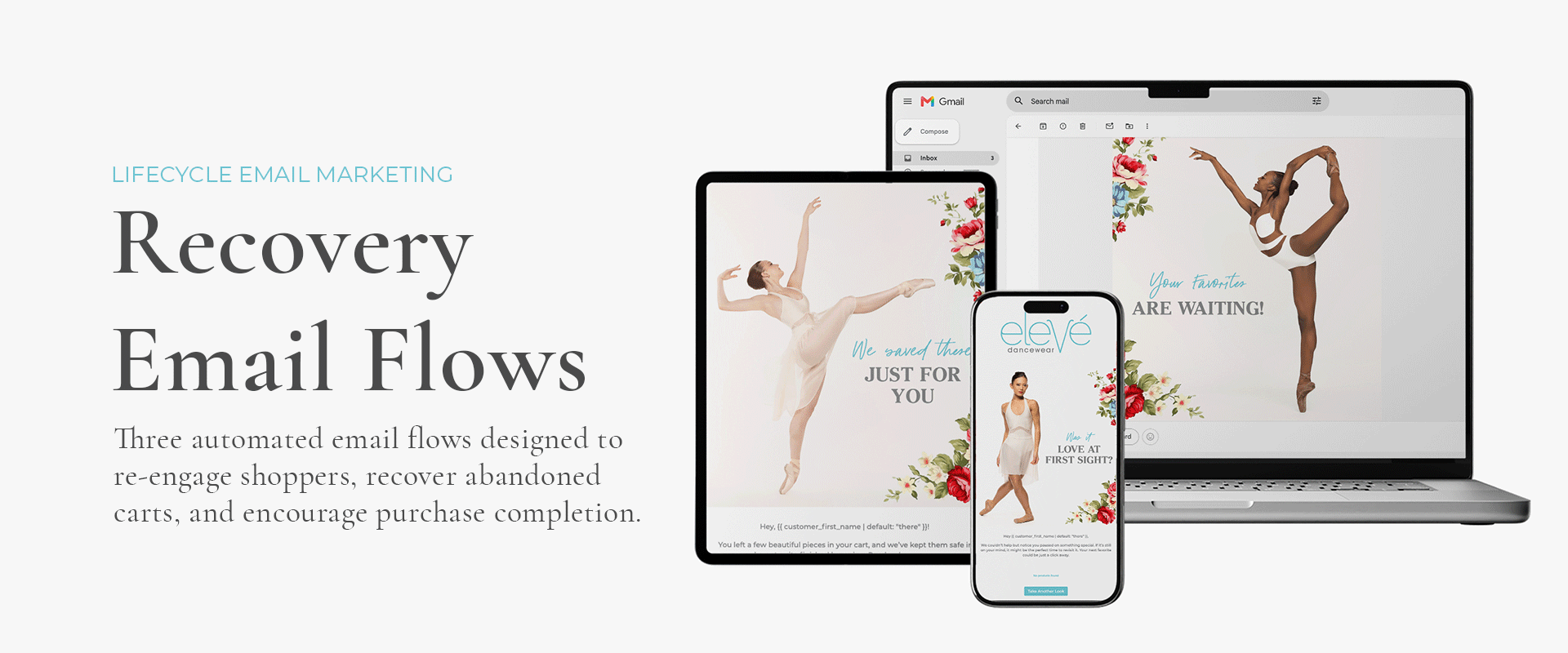
Overview
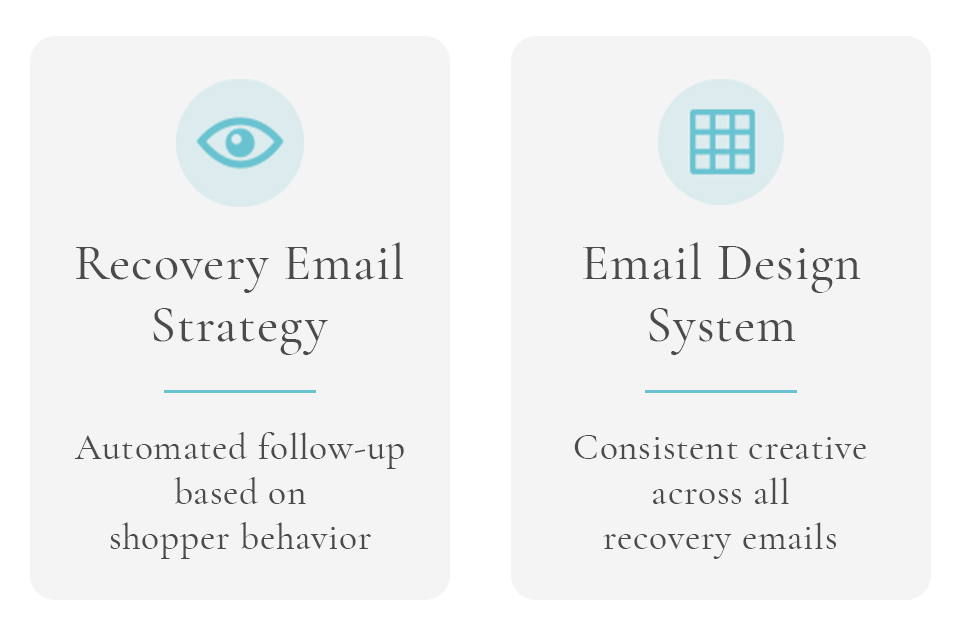
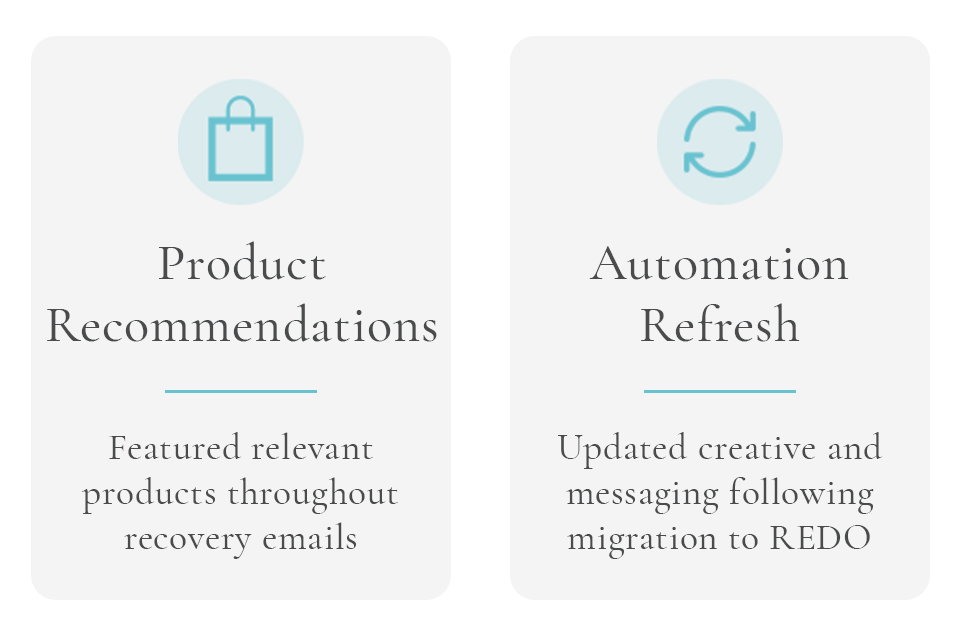
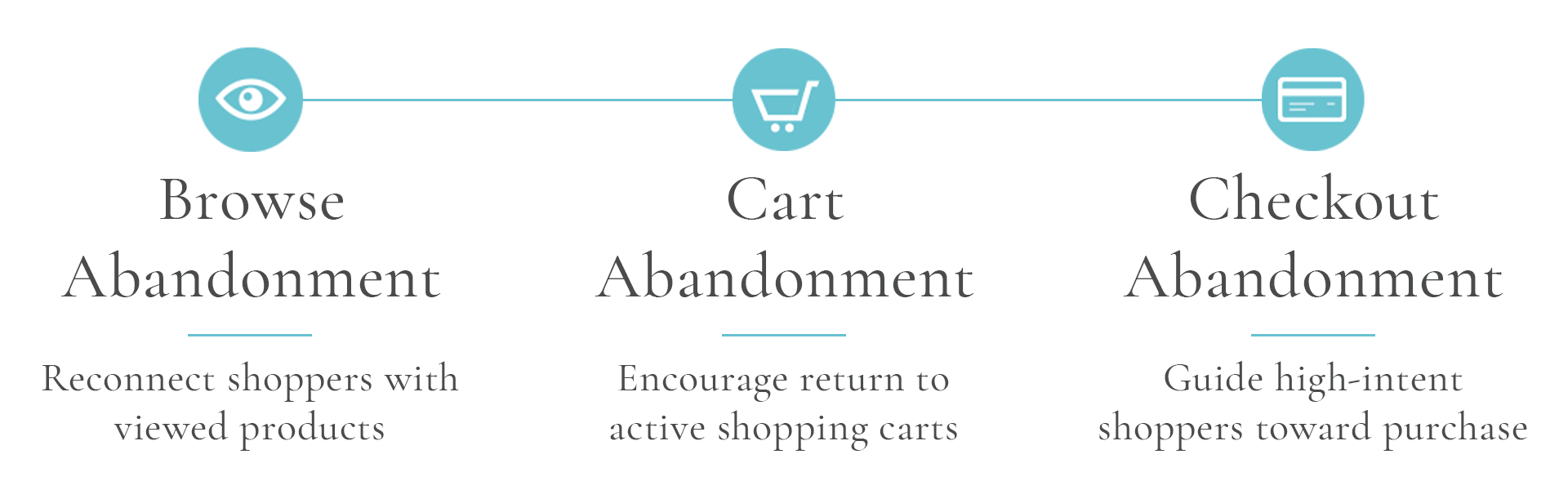
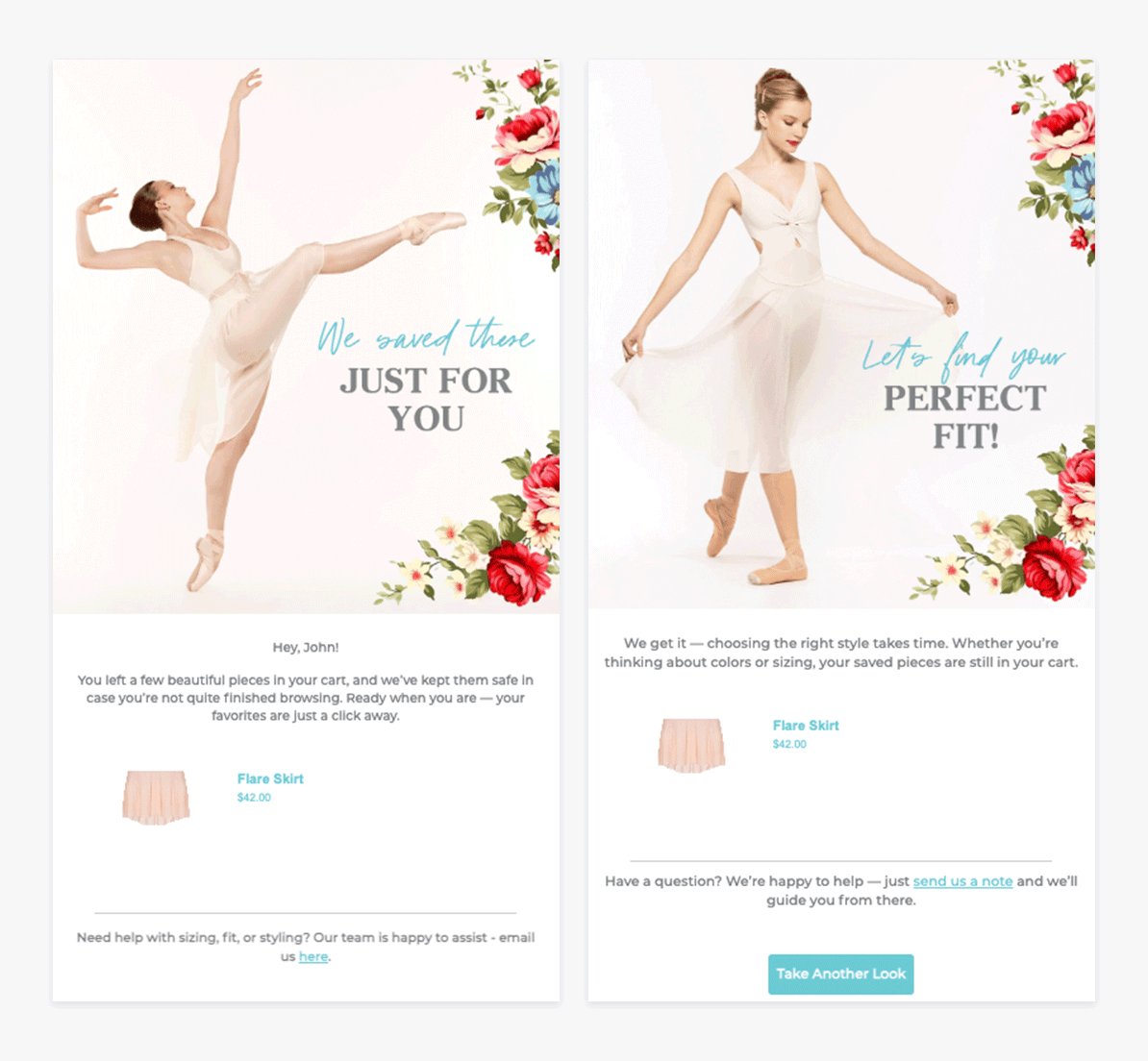
Following Elevé Dancewear's migration to REDO, I redesigned key recovery email automations, including browse abandonment, cart abandonment, and checkout abandonment flows. The updated series combined product-focused messaging, merchandising, and targeted follow-up emails to encourage shoppers to return and complete their purchase.
Role
• Redesigned recovery email automations
• Developed email layouts and messaging structure
• Created product recommendation and merchandising modules
• Managed implementation within REDO
• Maintained consistency across email design and ecommerce content
• Developed email layouts and messaging structure
• Created product recommendation and merchandising modules
• Managed implementation within REDO
• Maintained consistency across email design and ecommerce content
REcovery Email series
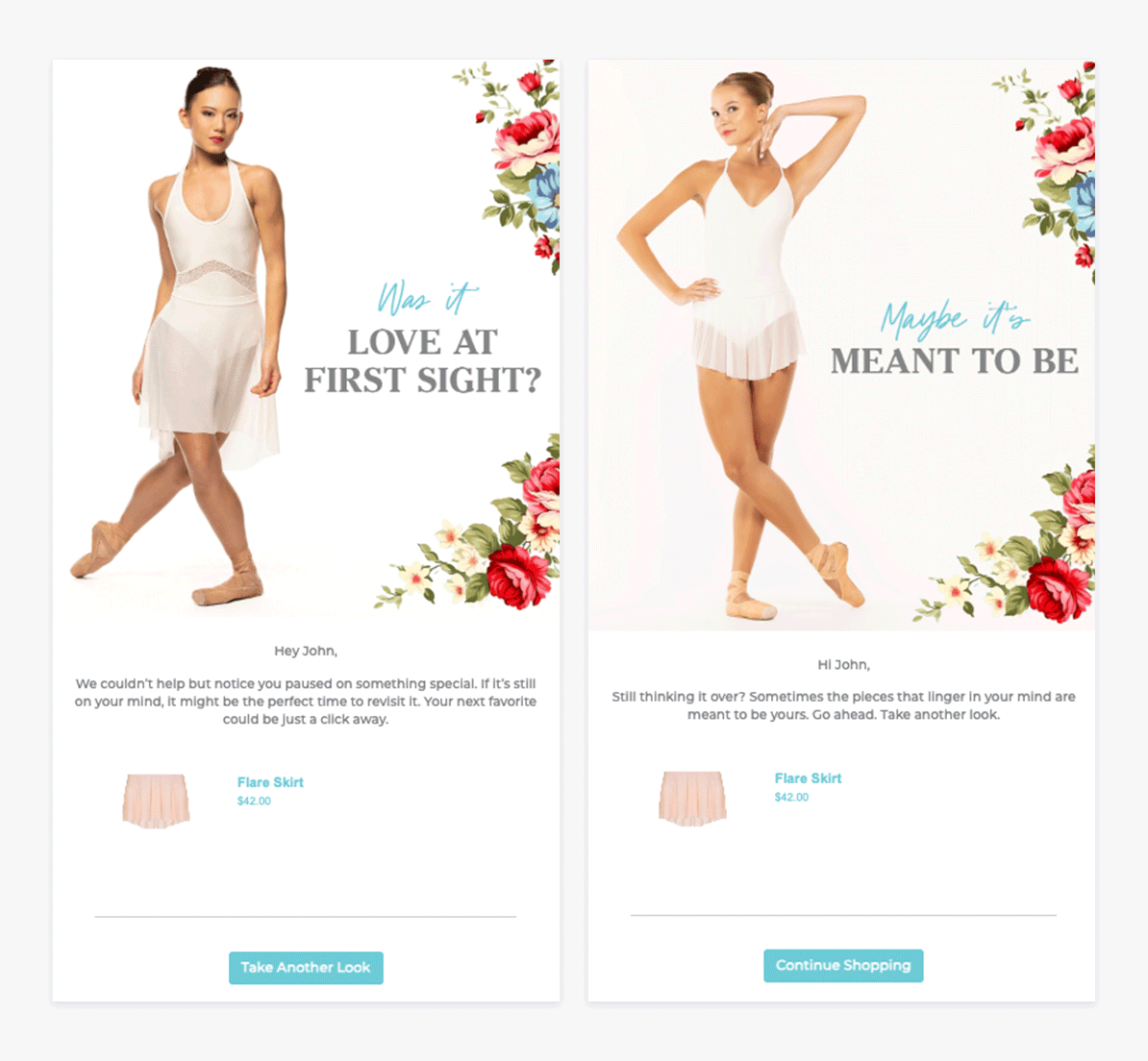
Browse Abandonment
Customer Behavior
Viewed a product but left without adding to cart.
Viewed a product but left without adding to cart.
Strategy
Re-engage shoppers shortly after they leave the site and encourage them to revisit viewed products.
Re-engage shoppers shortly after they leave the site and encourage them to revisit viewed products.
Optimization
A/B tested follow-up timing to identify the most effective re-engagement window.
A/B tested follow-up timing to identify the most effective re-engagement window.
Email Sequence
1 hour → A/B test follow-up
1 hour → A/B test follow-up
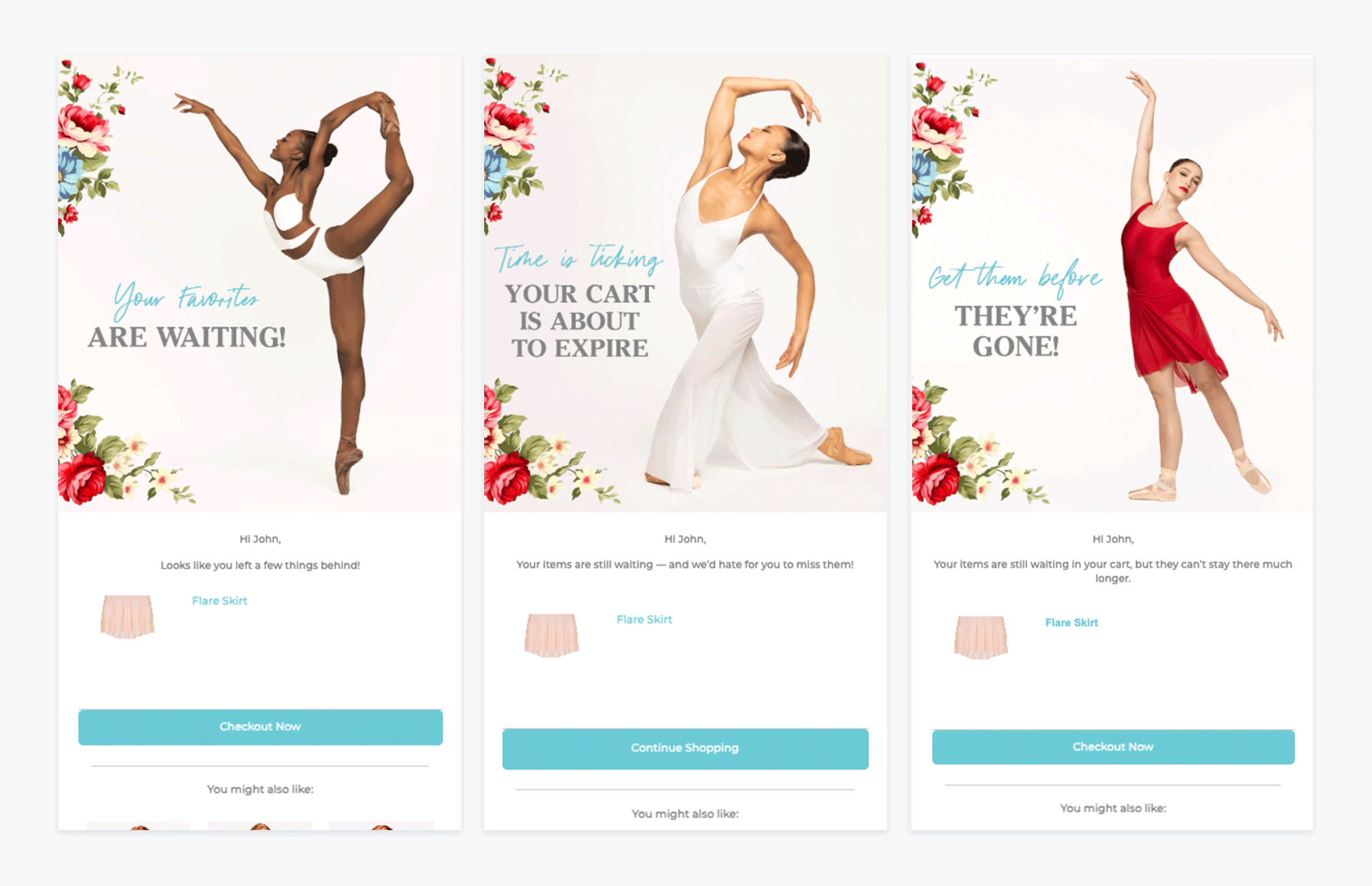
Cart Abandonment
Customer Behavior
Added products to cart but left before checkout.
Added products to cart but left before checkout.
Strategy
Reinforce purchase intent and reduce hesitation through timely reminders and product-focused messaging.
Reinforce purchase intent and reduce hesitation through timely reminders and product-focused messaging.
Email Sequence
1 hour → 18 hours → 2 days
1 hour → 18 hours → 2 days
Goal
Return shoppers to active carts and support purchase completion.
Return shoppers to active carts and support purchase completion.
Checkout Abandonment
Customer Behavior
Started checkout but did not complete purchase.
Started checkout but did not complete purchase.
Strategy
Encourage shoppers who started checkout to return and complete their purchase.
Encourage shoppers who started checkout to return and complete their purchase.
Optimization
Tested SMS and email messages to support checkout completion.
Tested SMS and email messages to support checkout completion.
Email Sequence
1 hour → 20 hours
1 hour → 20 hours
Goal
Reduce checkout abandonment and recover pending purchases.
Reduce checkout abandonment and recover pending purchases.
Key Takeaways