Role: Senior Marketing Designer | Project: Recovery Journey Refresh | Focus: Email • SMS • Lifecycle Marketing • Dynamic Content
Overview
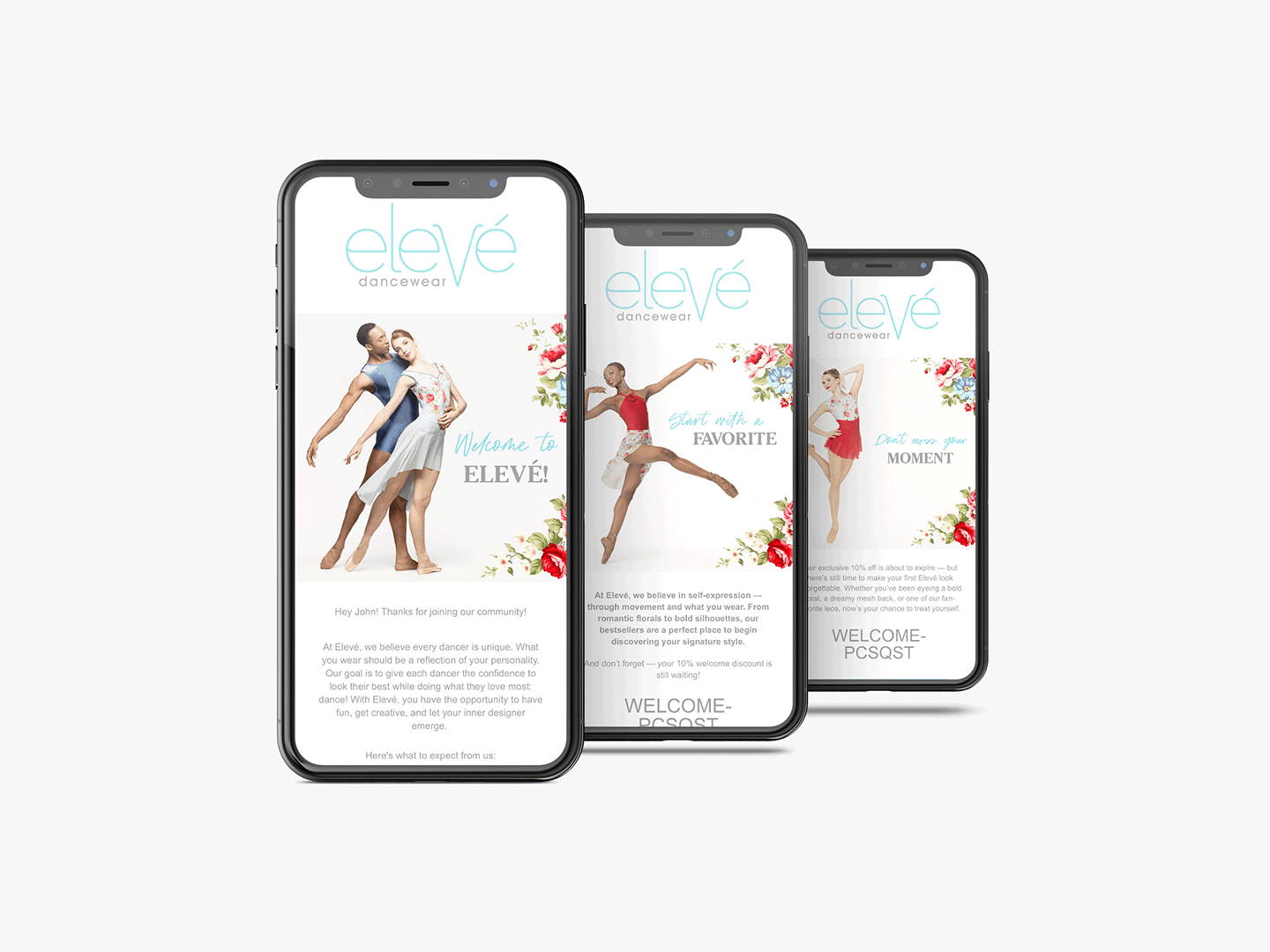
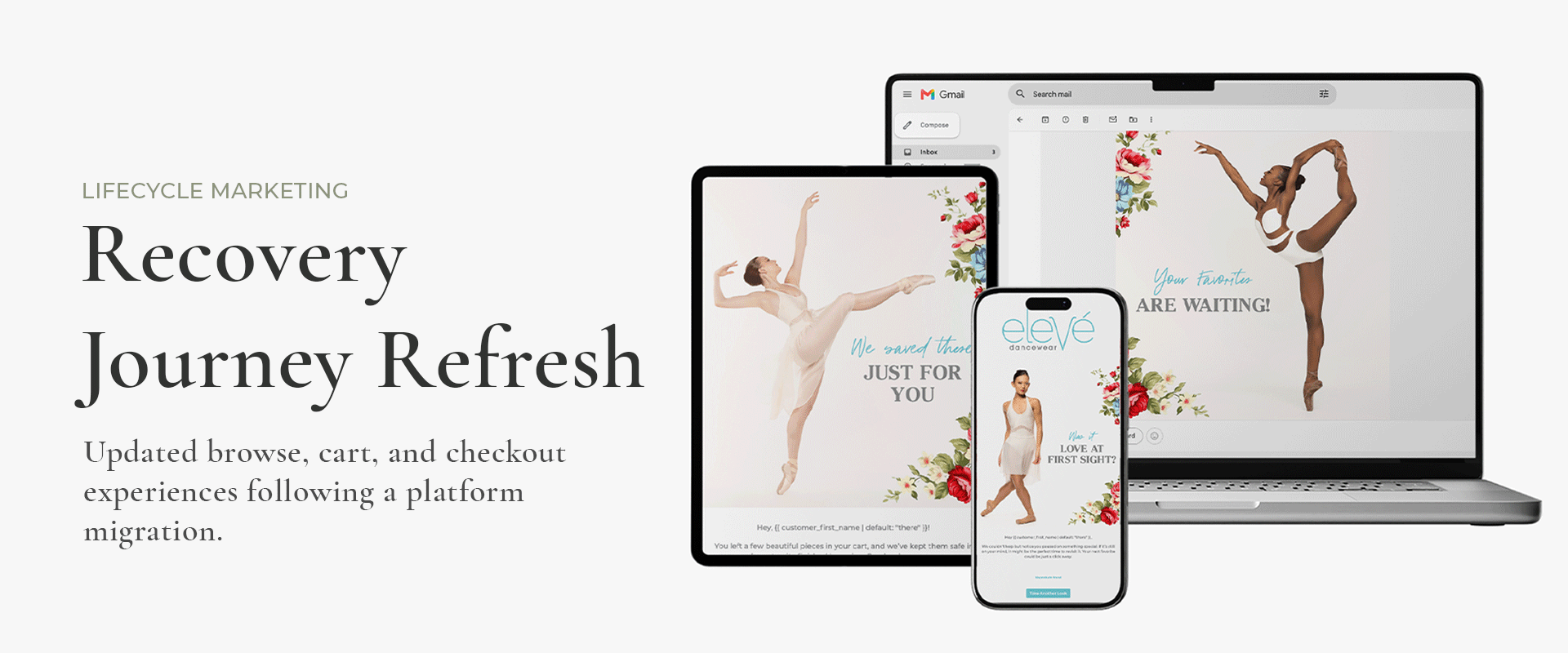
The browse, cart, and checkout recovery journeys were refreshed following the migration to REDO while preserving the existing automation logic. The objective was to strengthen purchase recovery by tailoring messaging to each stage of abandonment, reducing friction, and presenting relevant products without requiring ongoing manual updates.
MY ROLE
I redesigned the recovery experience across browse, cart, and checkout abandonment by updating the creative, refining messaging for each stage of the purchase journey, configuring dynamic product content, and developing supporting SMS creative for checkout recovery.
The work centered on matching the communication to customer intent rather than applying the same messaging across every recovery email.
RECOVERY Strategy
Each recovery journey reflected a different level of purchase intent, so the messaging evolved as customers moved closer to completing an order.
Browse Abandonment
2 Emails
2 Emails
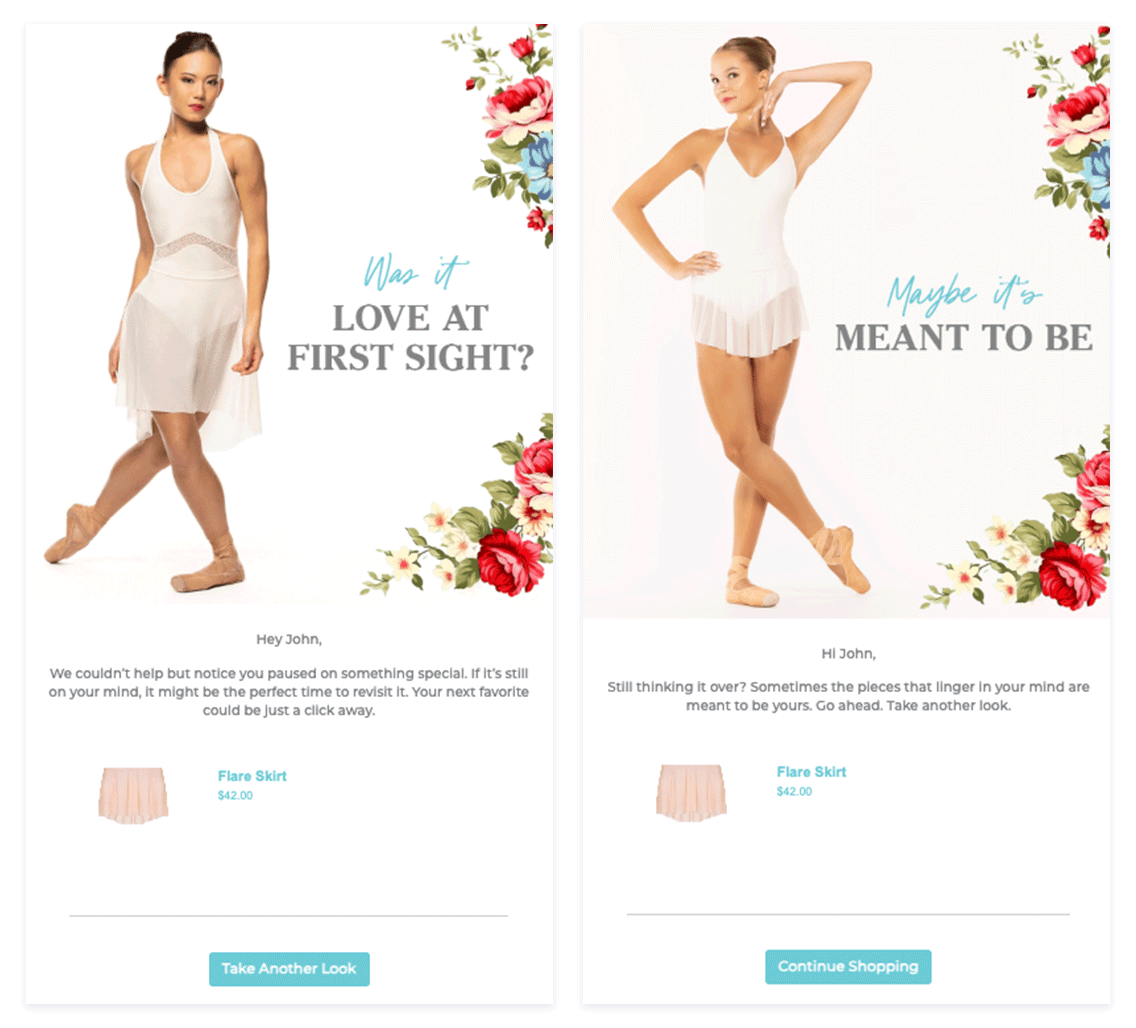
Browse abandonment focused on reintroducing products customers had viewed without creating unnecessary urgency.
Cart Abandonment
3 Emails
3 Emails
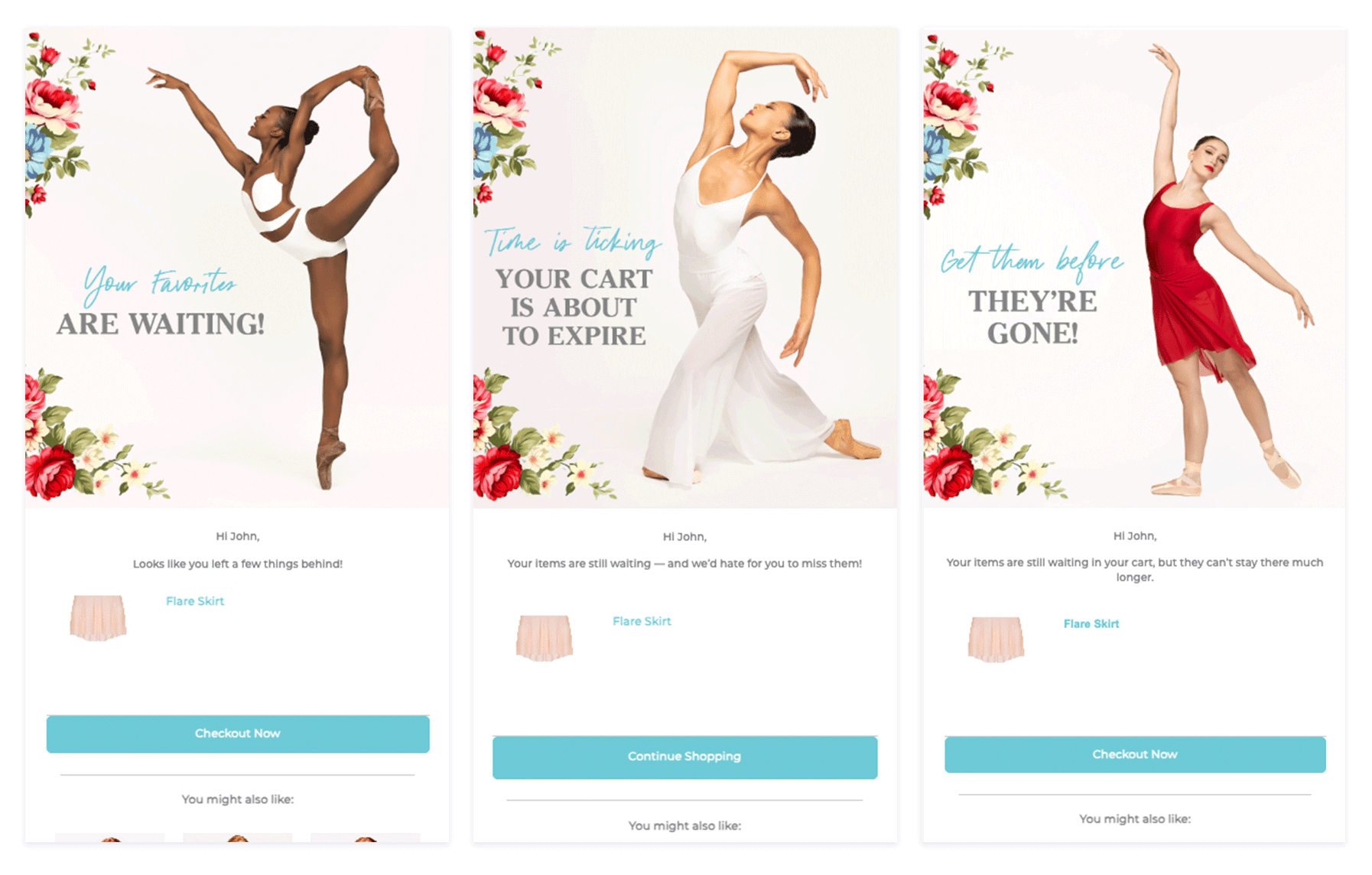
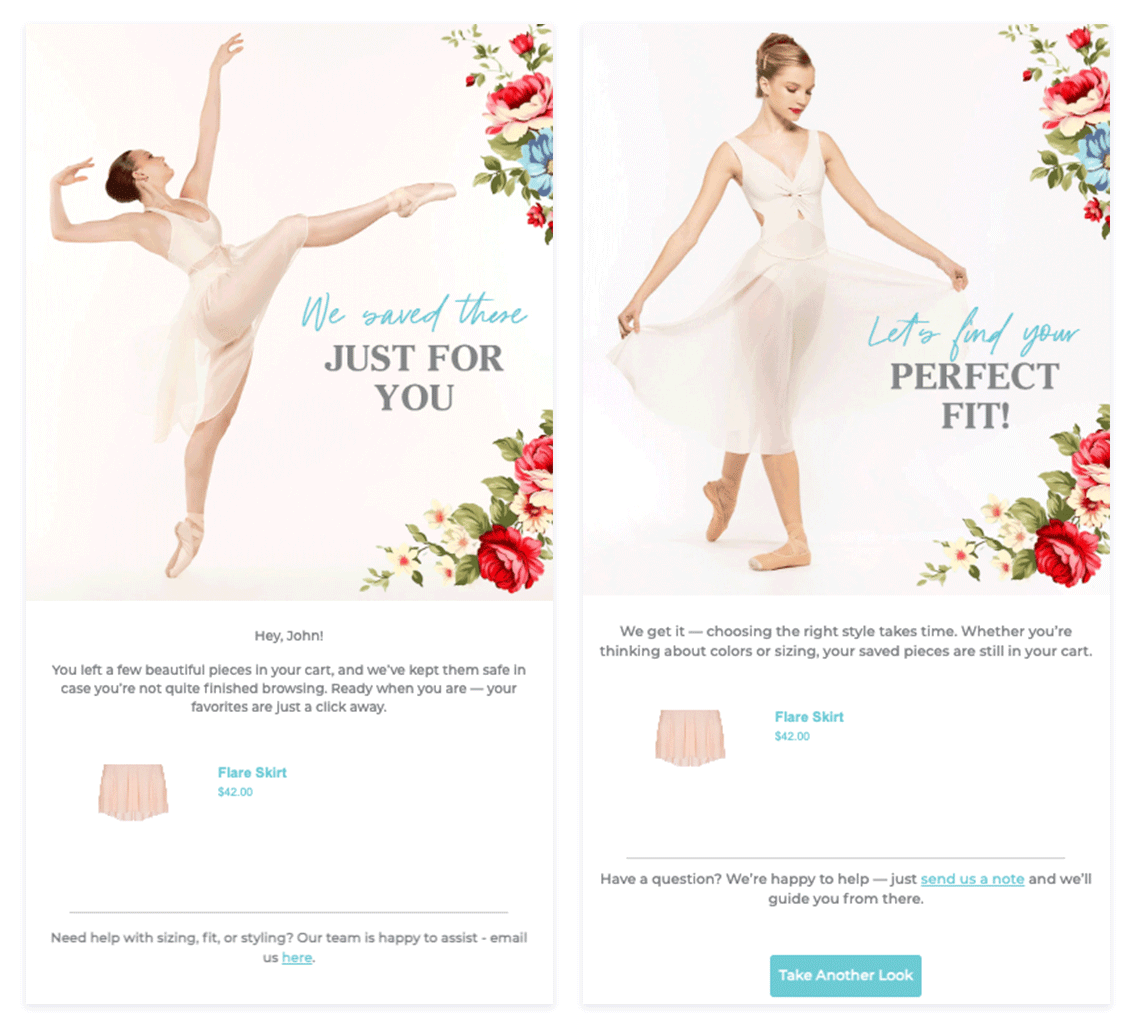
Cart abandonment acknowledged stronger purchase intent by gradually increasing urgency across three emails while dynamically displaying abandoned products.
Checkout Abandonment
2 Emails + 1 SMS Test
2 Emails + 1 SMS Test
Checkout abandonment shifted away from product discovery and toward reassurance, using both email and SMS to reinforce purchase confidence and encourage order completion.
DYNAMIC MERCHANDISING
Recovery emails perform best when the content remains relevant. I configured dynamic product merchandising so abandoned items updated automatically, reducing manual maintenance while keeping each message personalized to the customer's shopping behavior.
The result was a recovery experience that remained accurate over time without requiring ongoing creative updates.
Results